Sign in to unlock valuable content and features from our AI-driven platform. Receive timely technology updates and the latest information from the solution providers who can help you realize your goals.
Start your journey by entering your name and email address below:
Please confirm your email address!
We are going to send a confirmation email to your email address to let you receive timely technology updates and the latest information from the solution providers who can help you realize your goals.
Is this you? Please confirm your name and email address below to receive the requested information.
Please check this box to confirm that you are opting-in to receive communications from TAGZ Cloud and the data sharing outlined in our privacy policy.
Here is the information that you are requesting:
Data Security Insights
The 2026 Data Security Index delivers clear, research‑led insight into how organisations are protecting data while enabling AI‑driven innovation. Based on input from more than 1,700 global security leaders, the report explores rising GenAI risks, the move toward unified security platforms, and the role of visibility and governance in reducing complexity. To see where security strategies are heading, download your free copy of the report by completing this short form.
Where Should We Send This Information?
Thank you for requesting this information. Please enter your name and email address below so that we know where to send it.
Why are organizations moving from fragmented tools to unified data security platforms?
Organizations are moving from fragmented tools to unified data security platforms because the current mix of point solutions is creating visibility gaps, operational complexity, and higher risk.
According to Microsoft’s 2026 Data Security Index, decision-makers say their top visibility challenges come from:
- Poor integration with data security management platforms
- Lack of a unified view across environments
- Disparate tools with no centralized dashboard
These silos make it hard to connect insights, correlate events, and maintain consistent protection across workloads. As a result, 86% of surveyed decision-makers agree that a comprehensive platform with integrated solutions outperforms managing multiple best-in-breed tools that must be manually integrated and maintained.
Leaders are consolidating tools to:
- Improve threat detection and response
- Make it easier for data security teams to manage and maintain solutions
- Gain better visibility into data risks across environments
This shift is also driving adoption of Data Security Posture Management (DSPM) strategies, which unify visibility, continuous data risk assessment, and policy enforcement across data estates. By embedding DSPM into core operations and integrating it with identity management, organizations can know where data lives, who can access it, and which controls are applied—moving from reactive protection to more proactive, real-time risk management.
Overall, unified platforms help security teams do more with limited time, resources, and talent, while supporting secure innovation and responsible AI adoption.
How is generative AI changing data security risks and controls at work?
Generative AI is reshaping how employees work, but it is also introducing new data security considerations—especially when employees use AI tools outside approved channels.
The 2026 Data Security Index and the 2025 Work Trends Index highlight several trends:
- The majority of global knowledge workers report using AI.
- More than 70% say they are bringing their own AI tools to work.
- About 32% of surveyed organizations’ data security incidents involve the use of GenAI tools.
- 35% of organizations expect a higher volume of incidents in the coming year due to GenAI usage.
A key concern is not GenAI itself, but how and where employees use it. Many employees are:
- Using personal credentials to access GenAI for work (up 5 percentage points year over year)
- Using personal devices to access GenAI for work (up 9 percentage points year over year)
These behaviors can expose confidential or restricted data to external systems and bypass corporate protections, leaving organizations with limited visibility into where data goes and who can access it.
In response, nearly half (47%) of surveyed organizations are implementing specific GenAI controls in 2025, up from 39% the previous year. Their top priorities include:
- Preventing sensitive data from being uploaded into GenAI tools
- Training employees on secure use of GenAI tools
- Detecting anomalous user activity and identifying risky users
- Identifying sensitive data being uploaded to or generated by GenAI tools
Many organizations are also:
- Blocking unsanctioned GenAI tools
- Expanding and promoting approved, enterprise-grade AI tools
- Reinforcing clear policies and approval processes
The goal is to balance productivity with protection: enable employees to benefit from GenAI, while maintaining strong governance, visibility, and data loss prevention across AI usage.
How are organizations using GenAI to strengthen their data security programs?
Organizations are increasingly using GenAI not just as a productivity tool, but as a way to enhance their data security programs through agents and automation.
According to the 2026 Data Security Index:
- 82% of surveyed organizations report they have developed plans to use GenAI within their data security operations, up from 64% in 2024.
- 92% of surveyed decision-makers say they feel confident using GenAI to strengthen data security.
GenAI is being applied across both proactive and reactive security use cases. Top areas where data security leaders are using GenAI include:
- Discovering sensitive data across environments
- Detecting critical data security risks
- Investigating potential incidents
- Assessing the security posture of data environments
- Securing data environments more effectively
- Fine-tuning data security policies
Leaders report that GenAI systems can:
- Constantly observe and learn from large volumes of data
- Make recommendations for policy or configuration changes
- Automate routine security tasks
- Help teams analyze more data than traditional tools could handle
One security leader noted that GenAI reduced manual overhead around their data security program by at least 40% and improved processes by more than 50%, as GenAI programs automate routine tasks and adapt to evolving risks.
Human oversight remains essential. Organizations are using GenAI agents and automation to scale securely and intelligently, while keeping security experts in the loop to review recommendations, validate actions, and ensure responsible use. This combination of GenAI-driven automation and human judgment is helping teams do more with limited resources, improve efficiency, and maintain a stronger overall data security posture.
Data Security Insights
published by TAGZ CLOUD
TAGZ Cloud is part of the TAGZ Group of companies a privately owned IT Support and IT Services business formed in 1994. Today we’re proud to boast a strong team of IT engineers who thrive on rolling up their sleeves and solving your IT problems. We meet your business needs as a one-stop business that can provide tailored services from IT user helpdesks, project professional services, network cyber security and much more. We are on a mission to exceed your expectations and form a long-term, mutually beneficial relationship with you.




 Sign in with LinkedIn
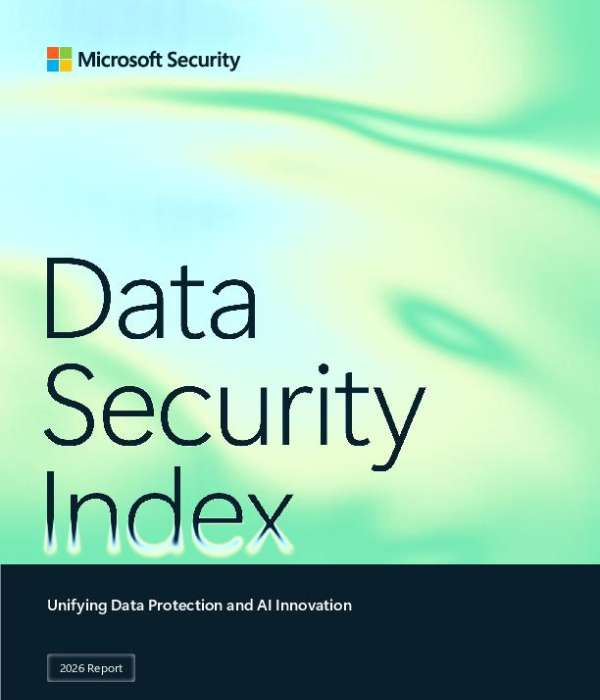 The 2026 Data Security Index delivers clear, research‑led insight into how organisations are protecting data while enabling AI‑driven innovation. Based on input from more than 1,700 global security leaders, the report explores rising GenAI risks, the move toward unified security platforms, and the role of visibility and governance in reducing complexity. To see where security strategies are heading, download your free copy of the report by completing this short form.